Your Phone Camera Is Changing Your Face. No, You Do Not Actually Look Like That

You look in the mirror, feel perfectly familiar, open the front camera and suddenly wonder who moved your nose. The easy conclusion is that the photograph exposed a truth the mirror had hidden. It did not. A selfie is a picture made from a very short distance with a particular lens, angle and processing system. Change any of those ingredients and the same face can look surprisingly different.
Perspective begins with distance, not with whether a lens is “good” or “bad.” When the camera sits close, the parts of the face nearest it occupy more of the frame relative to features farther away. The nose moves forward while the ears and sides of the face sit back. A 2018 JAMA Facial Plastic Surgery study modeled this effect and found measurable nasal distortion at common selfie distances.
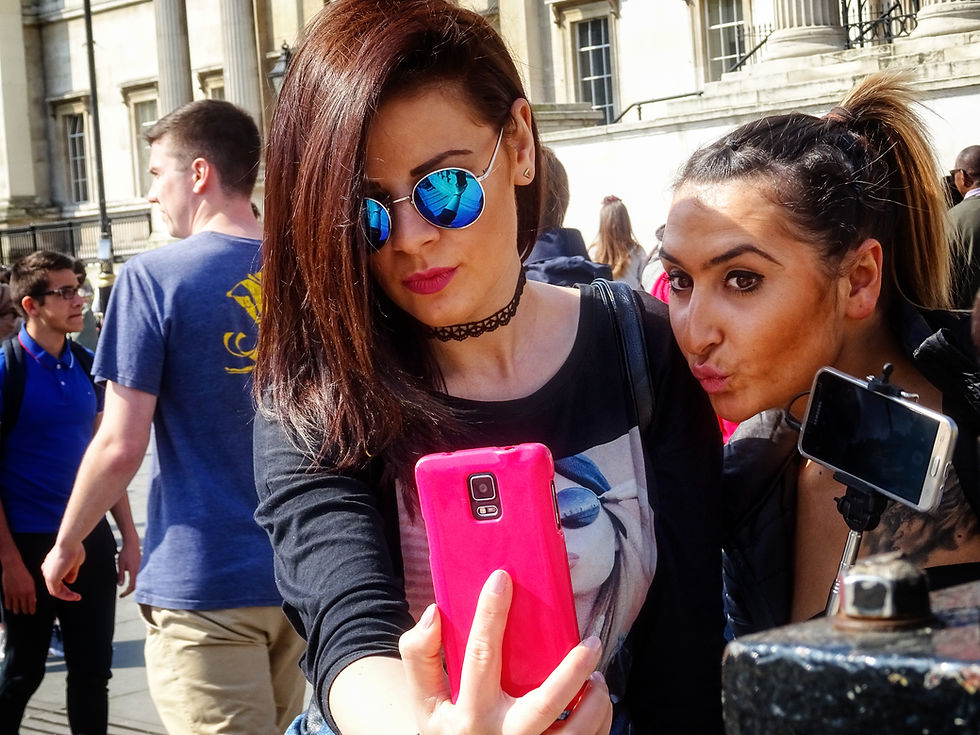
A selfie records one camera position, one lens and one instant. It is not a neutral measurement of a face. Image: Garry Knight / CC BY 2.0
Moving the camera farther away reduces the difference because the relative distances between nose, eyes and ears become smaller compared with the camera’s total distance from the face. That is why a portrait taken from several feet away and cropped later may feel more familiar than an arm’s-length shot. The camera did not discover a better face. It changed the geometry.
Angle adds another layer. A phone held above eye level can emphasize the forehead and eyes while reducing the lower face. A camera below the chin reverses the relationship. Turning slightly changes which cheek is closer and how the nose overlaps the background. None of these versions is uniquely correct. People see one another in motion from changing distances, not as a frozen wide-angle frame.
Light can create an equally dramatic shift. A small overhead source deepens shadows under the eyes and nose. Soft window light fills them. Mixed indoor lighting can alter skin color, while a bright background may force the phone to darken the face. Before blaming your appearance, turn toward even light and clean the lens. A fingerprint can make a photo look hazy in a way no beauty product will fix.
Then comes processing. Phones combine exposure, sharpening, noise reduction, color adjustments and sometimes face-aware corrections. Social apps may add another layer, even when the filter looks subtle. The result is not the same as looking through clear glass. It is a computational image designed to be bright, stable and pleasing on a small screen. Different apps can therefore produce different faces from the same camera.
Mirrors add their own confusion because the face you know best is reversed. A photograph usually shows the orientation other people see, so familiar asymmetries appear to switch sides. That unfamiliarity can feel like distortion even when the camera is several feet away. Flip the image and it may suddenly look more comfortable, not because it became more accurate, but because it matches years of visual memory.
The healthiest solution is not finding the one angle that hides everything. It is refusing to treat a close photograph as a medical scan of attractiveness. If a selfie consistently causes distress, step back from repeated checking and comparison. Filters, retakes and comments can turn a simple picture into an endless inspection routine. A camera is a creative tool, not an authority on whether someone looks acceptable.
For a more natural portrait, place the phone farther away, use a timer, keep the camera near eye level and crop afterward. Use the rear camera if practical, but remember that it still creates an image, not objective truth. Shoot a short burst while talking or moving rather than forcing one frozen expression. The photographs people love often contain energy that perfect symmetry would erase.
Personal style works the same way. It gets lost when every trend becomes a rule, and it becomes stronger when choices serve the person rather than the feed. A selfie can record an outfit, a friendship or a day worth remembering. Let it do that job. Your face exists in three dimensions, changes while you speak and belongs to a life much larger than a front camera held twelve inches away.


Comments