Age-Inclusive Couture Steps Onto the Paris Runway With LARA New York

PARIS — LARA New York placed mature models alongside European runway professionals at a presentation during Paris Fashion Week, using eveningwear to make a straightforward point: elegance does not expire at the edge of a youth-focused casting call. The show at La Galerie Bourbon included participants from the Chinese Golden Model Search and marked the label’s second collaboration with the group in Paris.
The casting arrives during a season in which age has become a visible subject in fashion. Earlier 2026 runways featured experienced actors and models in their 40s, 50s and beyond, prompting coverage that questioned why the industry had ignored the people most likely to possess both established taste and luxury purchasing power. LARA’s presentation carries that debate into a cross-cultural couture setting.
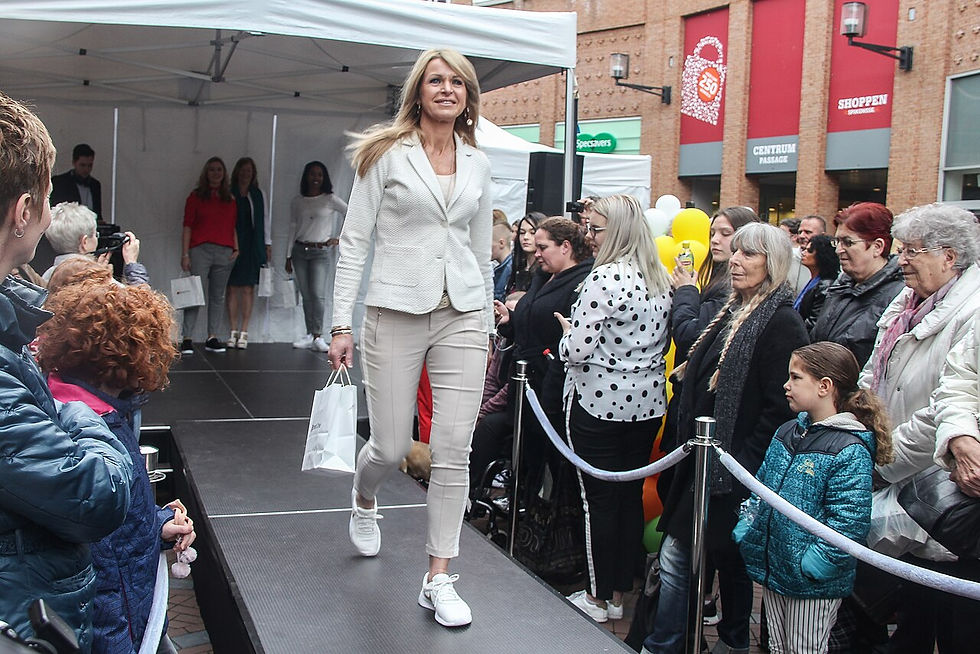
Mature runway casting challenges an industry that has long treated youth as the default image of fashion. Image: Peter van der Sluijs / CC BY-SA 4.0
Representation matters because runway images teach audiences who is imagined as the customer. When every face is very young, older consumers are asked to buy clothing through a fantasy that excludes them. Mature casting does not require abandoning novelty or youth. It expands the visual vocabulary so style can be associated with experience, posture and personal history as well as newness.
The distinction between participation and tokenism is important. One older model in a large cast can become a novelty photograph while the brand’s campaigns, sizing and retail experience remain unchanged. A sustained partnership, repeated across seasons, is more meaningful because it builds relationships and normalizes presence. LARA’s second year with the Golden Model Search gives the collaboration more weight than a one-time gesture.
Age inclusion is not the same as complete inclusion. Fashion can celebrate older models while still presenting a narrow range of body sizes, disabilities, skin tones or gender expression. Marie Claire’s reporting on mature casting made that tension explicit by asking why progress on age had not produced equivalent progress on size. An honest reading of the runway should hold both achievements and absences at once.
Creators covering the show have a role in that balance. A montage set to inspirational music may be shareable, but it can flatten the models into symbols. Better coverage names participants, shows garment detail and asks how the clothes are cut and sold. Fashion messages spread further when creators explain the choices behind an image rather than using a person’s age as the entire story.
Beauty language deserves the same care. Phrases such as “age-defying” and “looks younger than” turn praise into a reminder that visible aging is considered failure. An age-inclusive runway works best when maturity is treated as ordinary rather than miraculous. Beauty identity can shift without becoming a demand to erase age or texture, and audiences increasingly recognize the difference.
There is a commercial case as well. Consumers over 50 control substantial spending, yet advertising often speaks to them only through health, retirement or anti-aging products. Fashion brands that show contemporary style on mature bodies can address a neglected audience without creating a separate, patronizing category. The opportunity is strongest when product availability, fit and customer service support the imagery.
The runway also complicates the culture of influence. Many older models built careers without social media, while new participants may gain visibility through clips from the show. Their presence can broaden creator culture by demonstrating that expertise and charisma are not restricted to the youngest demographic. Brands should resist measuring every participant solely by follower count; the casting itself may create the audience.
LARA New York’s Paris presentation will matter if it contributes to a pattern rather than a brief viral moment. Repeated casting, credited models, inclusive fittings and campaigns that continue after fashion week are the real tests. Editors and creators should revisit the cast after the show, tracking bookings and opportunities rather than celebrating one photograph and moving on. The runway has already shown that mature elegance can command attention. The next step is for the industry to stop treating that fact as a surprise and begin designing its systems, not just its images, around a customer base that has always contained many ages.


Comments