Stella McCartney’s Ocean Message Shows How Celebrity Fashion Travels Online

PARIS — Stella McCartney used her Spring 2027 runway to make an environmental message travel far beyond the garden where the clothes were shown. Sea-life imagery appeared across the collection, Jennifer Lopez and Juliette Binoche sat in the rain-soaked front row, and models including Karlie Kloss and Miranda Kerr carried the show into celebrity and fashion feeds. The result was part runway, part advocacy campaign.
McCartney framed the collection around the gap between how people admire marine life and how they treat it as food. In backstage comments reported by the Associated Press and The Guardian, she criticized fishing’s impact on ocean animals. The show invitation included a message from oceanographer Sylvia Earle, reinforcing that the collection’s theme was intended as a direct ethical argument rather than decorative nautical styling.
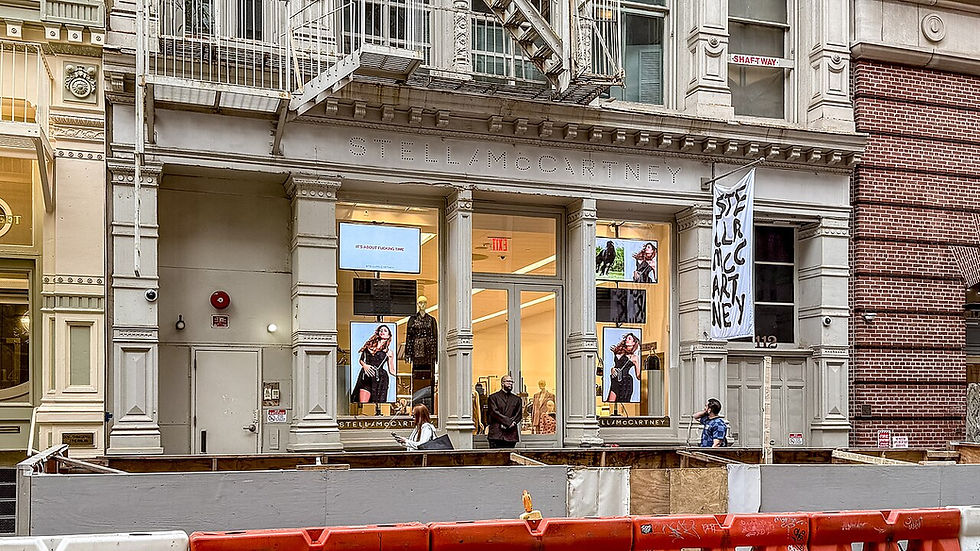
Stella McCartney’s label used its Paris show to connect fashion imagery with an ocean-conservation message. Image: Ajay Suresh / CC BY 2.0
That argument was delivered through clothes designed for circulation. Dolphin graphics, watery color and recognizable silhouettes gave photographers and short-form video editors clear visual anchors. A runway message survives online when a viewer can understand its premise without hearing every backstage quotation. The simplification helps reach, though it can also compress a complex environmental issue into one shareable image.
Celebrity attendance multiplies that reach. Lopez under an umbrella is likely to enter entertainment coverage that would never lead with fishing policy. Kloss or Kerr on the runway carries the collection to audiences following models rather than sustainability. This is how modern fashion communication works: the front row, backstage interview and runway are separate channels that converge during the same hour.
Creators covering the show therefore have a choice. They can repeat the celebrity image and leave the environmental claim unexplored, or they can use the attention to ask what the label has actually changed. McCartney’s company has long avoided leather, fur and feathers, a record that gives the message continuity. Still, no brand is beyond scrutiny, and sustainability claims should be tested against materials, supply chains, durability and transparent reporting.
The collection also demonstrates why fashion activism can feel contradictory. Luxury shows depend on travel, production and consumption while arguing for environmental restraint. That tension does not automatically invalidate the message, but it should remain visible. The useful question is whether a campaign reduces harm and changes practice, not whether its presentation is perfectly pure.
For influencers, accurate language matters. “Vegan,” “recycled,” “plastic-free” and “sustainable” describe different attributes and are not interchangeable. A garment can avoid animal materials while relying on petroleum-based synthetics; a recycled fiber can still shed microplastics; a durable item may have a higher upfront footprint but a longer useful life. Responsible coverage names the specific claim instead of granting a broad moral label.
Audience trust also depends on disclosure. If a creator attended through a brand invitation, borrowed clothing or received travel support, viewers should know. The disclosure does not make the analysis less credible; hiding the relationship does. Creator reach is increasingly tied to how messages travel across platforms, and transparency is what allows that reach to remain valuable rather than becoming indistinguishable from advertising.
Consumers do not need to respond by immediately buying an ocean-themed shirt. Repairing clothing, wearing what is already owned, buying secondhand and choosing fewer pieces can be more consistent with the environmental premise. Fashion imagery can inspire without becoming an order. The show’s strongest contribution may be to place marine ecosystems inside a cultural conversation that typically focuses on silhouette, celebrity and sales.
McCartney’s Paris presentation succeeded as communication because the clothes, setting and guests carried the same story. Its longer-term value will depend on what survives after the photographs disappear from feeds: better material choices, verifiable goals and a more informed audience. Creators who revisit those claims months later can provide more value than accounts that only reproduce launch-day spectacle. That follow-up can include checking product composition, company reporting and whether promised innovations reach actual retail. Celebrity amplification can make a cause visible overnight. Only transparent practice can make that visibility meaningful.



Comments