Your Color Season Is Not a Diagnosis. What Those Viral Drapes Can and Cannot Reveal

Seasonal color analysis creates one of the most satisfying reveals on social media. A client sits beneath neutral light while a consultant flips bright fabrics beneath the face. One blue seems to sharpen the eyes. Another appears to deepen shadows. After a few dramatic comparisons, the client becomes a winter, summer, autumn or spring and receives a palette that promises to make shopping easier. The visual change can be real. The certainty attached to it is where the trouble begins.
Color changes how nearby color is perceived. A fabric can reflect light toward the face, increase contrast and make redness or shadows seem more obvious. Hue, brightness and saturation all affect the relationship among skin, hair, eyes and clothing. A skilled draping session can identify patterns that a person finds useful. None of that requires believing that every human belongs permanently inside one of twelve internet categories.
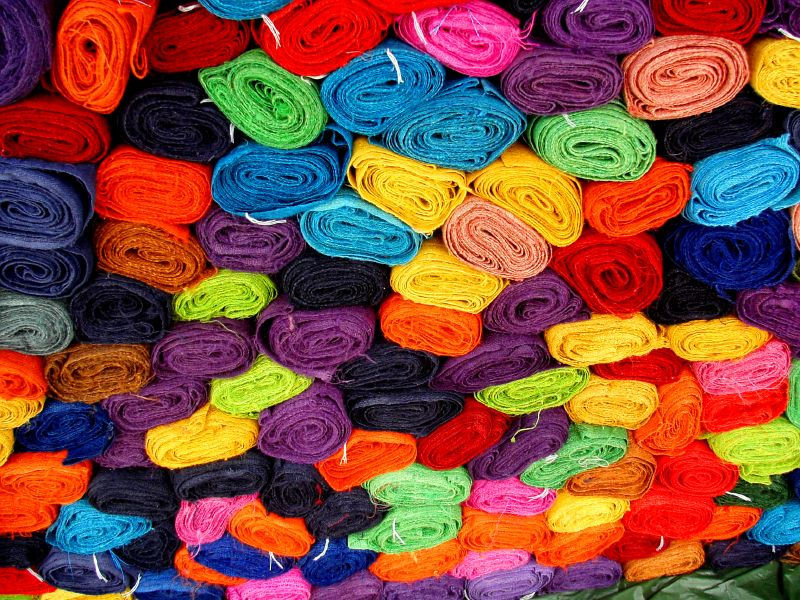
Color draping can make contrasts easier to see, but the result depends on light, surroundings and personal preference. Image: kakade / CC BY 2.0
The viral version often starts with a phone selfie, which is a weak measuring instrument. Cameras adjust exposure, white balance and color automatically, which is a major reason why clothing colors look different online. Ring lights can flatten features, warm bulbs can push skin toward yellow, and a blue wall can alter the scene. Medical photography guidance emphasizes controlled lighting and accurate white balance because skin color is easy to misrepresent. A beauty filter makes the problem worse.
Even objective skin measurement is more complicated than a warm or cool label. Researchers use tools and color spaces such as CIELAB to describe lightness and color dimensions under controlled conditions. A 2024 review in npj Digital Medicine warned that common skin-type categories are often misused as substitutes for measured skin tone. If medicine struggles to standardize color assessment, a quiz based on wrist veins and jewelry cannot produce a clinical truth.
That does not make the styling exercise worthless. A palette can reduce decision fatigue, encourage combinations someone had not tried and explain why two nearly identical neutrals behave differently. The useful outcome is often practical rather than scientific: these six colors consistently make the wearer feel clear and confident, while those four require more makeup or styling effort. Personal observation can be valuable without becoming a diagnosis.
The categories also carry cultural and commercial baggage. Modern seasonal analysis grew from systems that became popular in the late twentieth century and has expanded into increasingly specific subtypes. Some approaches were developed around limited ranges of complexions. Consultants today may work across far more skin tones, but the method is not automatically inclusive simply because a chart contains more boxes. Experience with diverse clients matters.
Online creators can accidentally turn the system into a new beauty rulebook. A follower is told that black is forbidden, gold is wrong or a favorite lipstick belongs to the opposite season. The language sounds precise enough to override taste. Fashion should not require permission from a fabric fan. A color that produces high contrast may be exactly what someone wants, even if a consultant would describe it as less harmonious.
A better home test begins with consistency. Stand near indirect daylight, turn off filters, use the same camera position and compare fabrics that differ clearly in temperature, value and saturation. Look at the whole face rather than one feature. Repeat the comparison on another day and in a mirror, not only through a screen. If the answer changes with every exposure adjustment, the camera is typing the image more than the person.
Makeup adds another layer. Foundation, bronzer, hair color and self-tanner can change the visible relationships a consultant is evaluating. That does not invalidate the result; it changes the question. Someone choosing clothes for their current hair and everyday makeup may want those elements included. Someone trying to understand bare skin may prefer to remove them. The goal should be stated before the drapes begin.
Creators covering color analysis can be most useful when they show uncertainty. Explain why one fabric was chosen, display the lighting setup and admit when a client sits between categories. The same visual discipline helps a viewer spot an AI fashion outfit video. Avoid diagnosing health from pallor, redness or under-eye color. Those signs can reflect lighting, sleep, irritation or a medical issue and do not belong in a fashion verdict.
A color season works best as an editing tool. Keep the shades that make dressing easier, ignore the rules that flatten personality and remember that a camera-ready reveal is designed for contrast. The drapes can teach the eye to notice color relationships. They cannot issue a permanent identity. Your wardrobe is allowed to contain evidence that you changed your mind.


Comments