The expensive choreography of #RushTok turns sorority recruitment into a high-stakes fashion showcase
- Aug 10, 2025
- 2 min read
Updated: Aug 11, 2025
10 August 2025
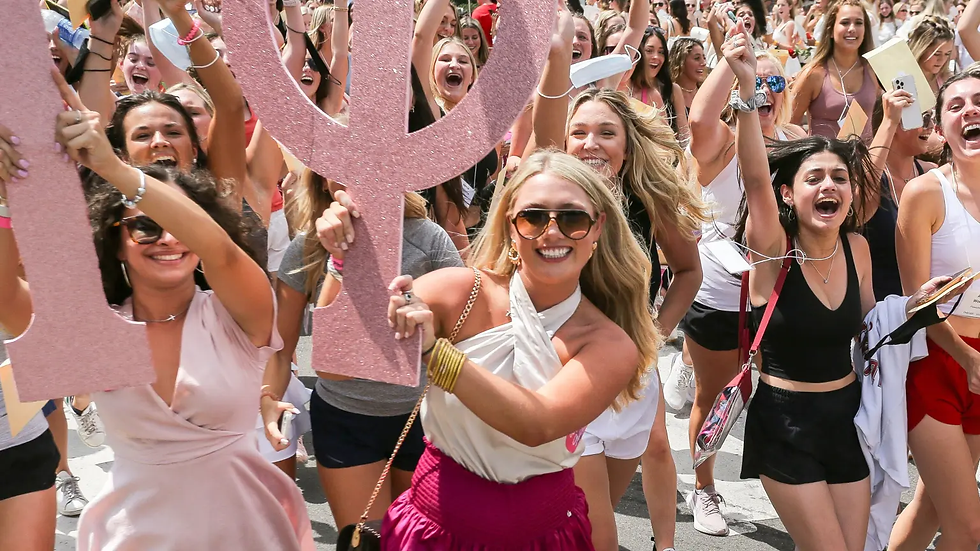
In the throbbing energy of college anticipation, sorority rush season has erupted into a dramatic spectacle where gowns and Gucci have supplanted glue and pins, orchestrated under the gleam of TikTok’s viral lens.
Once a discreet college ritual, the rush process now unfolds as a choreographed parade of themed costumes and runway-ready looks set to the soundtrack of “Grease,” “Barbie,” and even “Top Gun”, complete with girls posing in period attire aboard restored World War II fighter planes it is part performance art, part social audition, and entirely elevated by social media.
At the University of Alabama and beyond, applicants known as Potential New Members meticulously craft broadcast-friendly looks, posting #RushTok videos that attract millions of viewers and ignite fierce competition among sororities trying to stand out. Kylan Darnell, a senior and unofficial queen of this modern rush, has amassed a million-plus following by releasing elaborate videos in poodle skirts and aviator caps, blending pastel nostalgia with high-octane storytelling. Her themed outfits make her both muse and mentor in an ecosystem saturated with curated identity plays, where even her younger sister’s rebellious feed plays a part in the spectacle.
Beyond creative expression lies a significant financial runway. Teams of stylists, coaches, and parents invest thousands of dollars trying to secure coveted spots in the most prestigious houses. Mothers, dubbed helicopter or Greek-fearing moms, push budgets to six figures coaching fees, designer wardrobes, and social media branding dominate the checklist.
Rush consultants offer strategic planning, from carefully crafted resumes to training in nonverbal cues, persuading families that winning a house depends on having both the right look and pitch. Jewelry by David Yurman, stacked with Cartier and Rolex pieces, is packaged into every wardrobe, elevating fashion to armor in the battle for bids style, after all, is performance in the age of the camera-ready brainchild of RushTok.
On one hand, the rush season is theatrical. Teams build elaborate sets inside sorority houses they are called Broadway-level productions, transforming living spaces into scenes designed to thrill and seduce. Behind the curtains, designers consult on linens and furniture to create monumentally aspirational "Versailles-like" backdrops. In extreme cases, parents even buy property near campuses to stay close during the whirlwind. In the age of aesthetic entertainment, rush becomes a multigenerational production.
Yet, beneath the surface of choreographed perfection, the ritual prompts growing criticism. Some see the glitz as superficial, while others compare the shift to shows like Toddlers and Tiaras a display of extreme grooming for a fleeting moment of glory.
Critics argue this cultural shift puts pressure on young women to perform consented femininity, masking the traditional community-building goals of Greek life. Despite concerns, many participants embrace the friction, seeing Rush as a launchpad for future ambition, while some like Darnell describe it as an opportunity for social media success using RushTok to monetize and build careers long after Bid Day ends.
Through all of the orchestrated scenes and polished deliveries one thing remains clear: sorority rush has evolved into something far more than dating culture or friendship chapter. It is performance, it is competition, and it is a microcosm of how identity, legacy, and online persona fuse in the modern age. In this reality what was once tradition is now spectacle and none of it escapes a frame.


Comments