Sami Sheen Chooses Halloween Costume Over Health as Breast Implant Illness Persists
- Jul 10, 2025
- 3 min read
10 July 2025
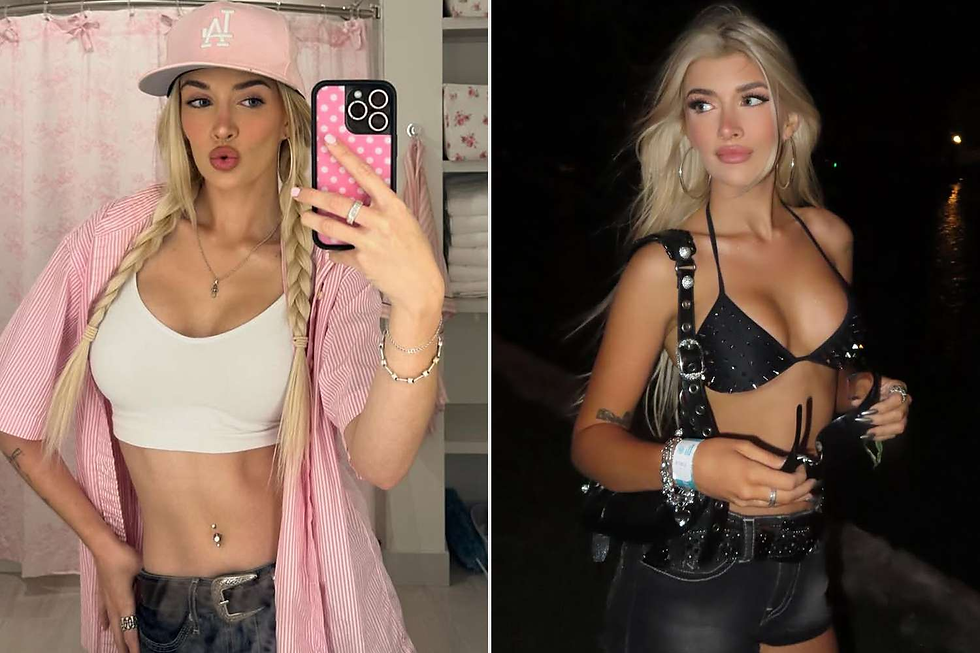
Sami Sheen, the 21‑year‑old daughter of Charlie Sheen and Denise Richards, has begun opening up about a deeply personal dilemma as she grapples with breast implant illness while opting to delay removal surgery so she can finally live out a long‑standing Halloween dream. In a candid TikTok video shared on July 10, Sheen admitted she has been experiencing debilitating symptoms, chronic fatigue, hair loss, brain fog, joint pain, acne, sensitivity to temperature, vertigo, and headaches for nearly two years, and recently decided to have her implants removed. Despite these health concerns, she announced she would postpone the explant procedure until after Halloween so she can embody her childhood idol Pamela Anderson, complete with blond hair and the enhanced chest she has developed through augmentation.
The implants were placed in November 2023 in a decision motivated by appearance and confidence, but complications emerged quickly. Nine months later she underwent a rhinoplasty to address bullying about her resemblance to her father. The implant illness has since upended her life, manifesting in a collection of symptoms that left her searching for answers. Last month she confirmed her decision to seek removal after learning of breast implant illness, prompting relief but also hesitation given the psychological and emotional challenges of reversal.
Now she finds herself in an emotional tug of war between physical well‑being and deeply personal expression. In her TikTok discussion she acknowledged that delaying surgery might be viewed as irrational to some. “I don’t want to get rid of them yet,” Sheen confessed. Her reason was simple but surprising: she has always wanted to dress as Pamela Anderson for Halloween and feels that with her blond hair and curves she can finally do justice to the visual likeness, a childhood aspiration that has held symbolic weight for years.
Public reaction to her choice has been swift and polarized. Many fans have urged her to prioritize health, offering practical suggestions such as wearing a costume now and saving the surgery for later or recreating the look temporarily. Others have implored her to remove the implants immediately to prevent worsening illness. One compassionate voice wrote “get them out so your health does not get worse,” while another observed that costume photos taken early could allow a safe path without delay.
Sami’s health journey offers a window into the emotional complexity of cosmetic procedures. Choosing to delay an operation considered critical to her recovery sheds light on the emotional bond that some individuals form with their surgically altered bodies. She has publicly thanked fans for their transparency, though she admits the decision is an ongoing struggle the tension between wanting to heal physically and holding onto a cherished appearance long dreamed about in a specific context.
Even as she delays the surgery, Sami has signaled that her health remains the central concern. She shared her symptoms and ongoing diagnosis with hundreds of thousands of followers across social platforms and recently reached out for recommendations for expert removal surgeons in Los Angeles. The open reminder that women must advocate for their own care has resonated widely, adding a note of caution and solidarity to conversations about breast implant illness.
Sami’s public story has encouraged growth in breast implant awareness and dialogue. Breast implant illness is not recognized as formal medical diagnosis by the FDA yet affects a significant number of women. Symptoms are varied and can mimic autoimmune conditions. The only known path to mitigate or resolve the condition is removal of the implants, a fact experts and advocates emphasize.
In sharing her plans, the OnlyFans star has consciously invited controversy. She is effectively weighing her physical recovery against reaching a symbolic milestone tied to identity and self expression. It remains unclear whether delaying surgery will impact her illness trajectory. Advocates suggest any prolonged exposure might prolong the healing process, while others respect her choice to pause. In either case, Sami’s honesty has opened a broader discussion about autonomy, medical ambiguity, aesthetic identity, and the notion of agency under physical strain.
As Halloween approaches, observers across social media are watching whether she proceeds with removal or prioritizes her costume. The timing may appear trivial to some, yet for Sami it is a deeply human choice balancing self‑care and self celebration. Whether she ultimately proceeds with surgery or delays longer, her journey adds nuance to a national conversation about the cost of beauty, bodily autonomy, and the right to choose which narrative defines their own lives.


Comments