NYC Restaurants Push Back as “Food Influencers” Demand Free Meals and Champagne
- Dec 3, 2025
- 3 min read
03 December 2025
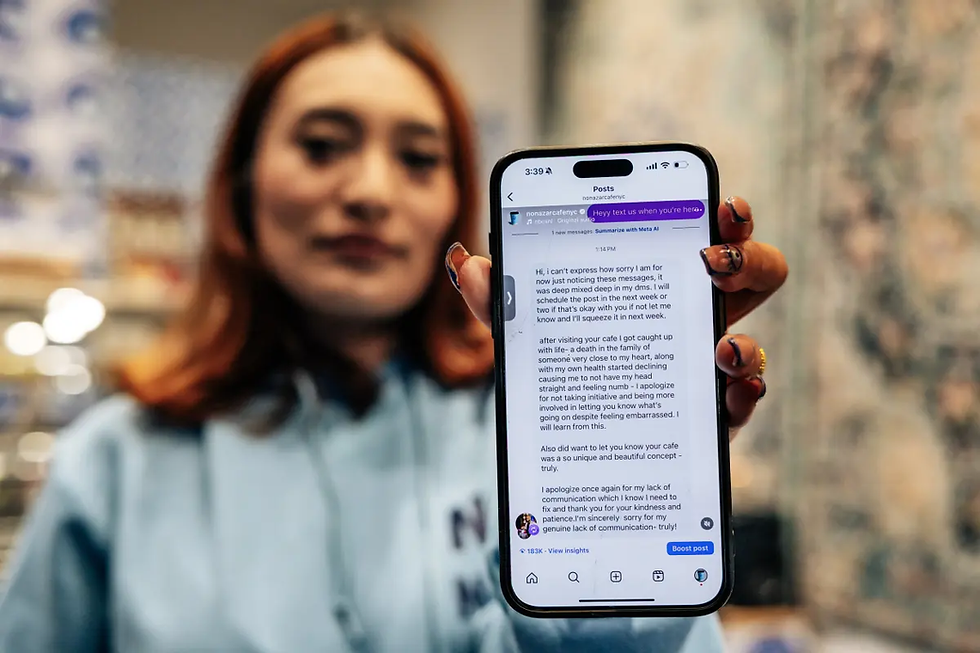
Restaurants across New York City are pushing back hard against a wave of self-proclaimed “food influencers” who regularly show up expecting free meals, upscale drinks or even luxury Champagne and sometimes leave with a larger bill than gratitude. The backlash is mounting as owners say they are being taken advantage of by people who treat social media exposure like currency.
In recent months requests for “collaborations” have flooded inboxes at cafés, bistros and fine-dining spots. Some of these influencers promise video reviews in exchange for complimentary courses but many never follow through. One restaurateur recalled being approached for a partnership by someone who claimed to be a genuine food content creator. After a full meal and drinks worth about $200, the influencer vanished. When publicly called out, she responded with a harsh review that was later deleted.
The problem is especially acute for smaller, independent businesses. The margins are thin, the operating costs high, and a free meal adds up considerably. Some influencers allegedly arrive asking for more than initially agreed, like an extra drink or a $300 magnum of Champagne as one restaurateur reluctantly admitted they provided under pressure.
At the heart of the controversy are “micro-influencers,” typically people with under 50,000 followers expecting payment in plates of food rather than cash. For many restaurant owners the math does not add up. Paying for ingredients, labor, rent and overhead, they say even one extra free meal is a cost. Many have now adopted a firm policy: “We don’t pay for posts.” Some have become stringent about vetting accounts, checking if followers and engagement seem real or purchased. If 80 percent of numbers look fake, they decline collaboration.
One striking example fueling the backlash is the case of an alleged serial dine-and-dashed influencer who racked up more than $4,000 in unpaid bills at upscale Williamsburg hotspots before being arrested. That incident sparked a sharp reaction in the restaurant community, with many owners saying they now reflexively deny influencer requests.
Some restaurant owners liken the surge in influencer demands to “digital panhandling.” They argue that many of these social-media wannabes treat restaurants as props for content, expecting glamour, freebies, and clout but willing to deliver little in return.
Critics of influencer culture also point out that style does not equal substance. A well-lighted video or a trendy caption does not replace actual critique, deep knowledge of cuisine, or consistent review practices. As one NYC consultant noted, reviewing restaurants requires expertise and fairness, the kind rarely offered by casual content creators chasing quick likes.
Still, the power of social media remains undeniable. Studies indicate that a large portion of TikTok and Instagram users in the U.S. say they have visited a restaurant after seeing it featured online. That potential for exposure tempts many small restaurants to give influencers a chance despite the risks.
But as backlash grows, many establishments are opting out of the gamble. The shift represents a broader reckoning in the hospitality world a refusal to treat food and service as barterable content, and a reassertion of value for labor, ingredients, and dignity. For now the message from NYC restaurants seems clear: exposure is not currency, and no post justifies a free meal.

Comments