New York Fashion Week Front Rows Turn Celebrity Style Into a Second Runway

New York Fashion Week’s front rows are functioning as a second runway, with actors, musicians and creators translating designer clothes into personal outfits before the Spring 2027 collections have finished showing. The most visible arrivals this season do not point to one uniform trend. Instead, they show several ways of moving between relaxed tailoring, strong color and recognizable house codes.
The official calendar runs from September 10 through 15 and includes roughly 70 runway shows and presentations. Several major brands presented on the eve of the schedule, concentrating celebrity attention early in the week. That timing helped front-row photographs circulate alongside runway coverage, giving audiences two related but distinct sources of style ideas.
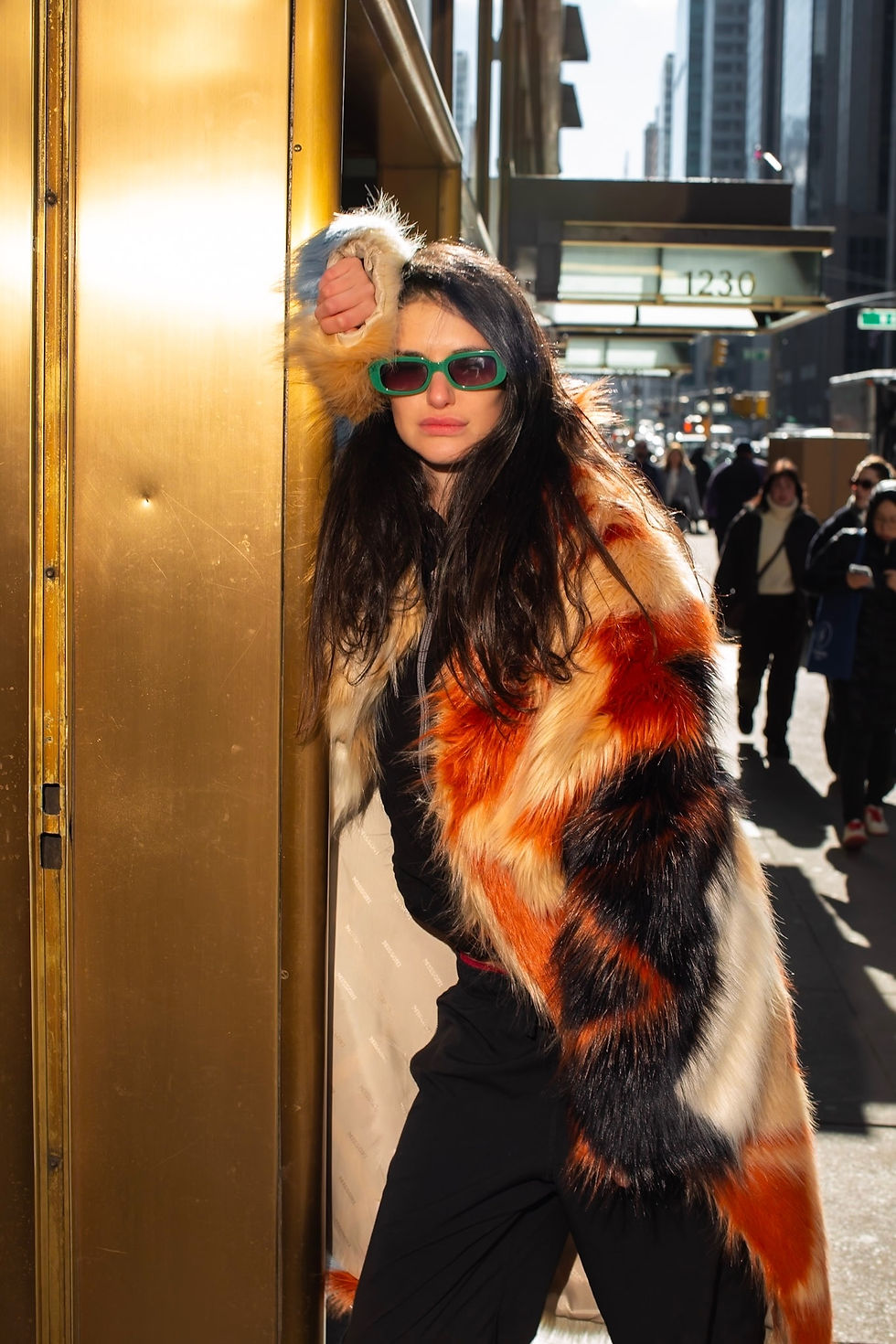
Street style outside a New York Fashion Week show in 2025. Photo: MarieClairestreetstyles / CC BY-SA 4.0. Display size adjusted.
At Ralph Lauren, guests including Viola Davis, Cynthia Erivo, Elizabeth Debicki and Meghann Fahy worked largely within a rich neutral palette. AP described the collection itself as a modern, sensual take on romance. The arrivals echoed that polish without producing identical looks, which is precisely why front-row dressing has become useful content: a brand’s vocabulary is visible, but each person edits it differently.
Calvin Klein’s event offered a sharper minimalist direction. Pamela Anderson wore a square-neck black midi dress with pointed shoes and a matching clutch, while other guests used crisp shirting and understated separates. The visual impact came from proportion and restraint rather than heavy ornament. It was a reminder that a simple silhouette can read as deliberate when the fit and accessories are controlled.
Color made an opposite argument at Michael Kors. Gabrielle Union appeared in a saturated red knit look, while Amanda Seyfried combined chartreuse with chocolate brown at Tory Burch. Neither combination needs to be copied exactly to be useful. The practical idea is that one decisive color relationship can organize an outfit more effectively than several competing statement pieces.
Cult Gaia’s audience leaned into texture and relaxed shape. Katie Holmes paired an easy T-shirt with dramatically pleated trousers, and Iman arrived in a tweed trench. Those looks show two different paths to presence: exaggerating volume in everyday separates or allowing a single outerwear piece to carry the outfit. Both are easier to adapt than a head-to-toe runway recreation.
Celebrity attendance also expands the audience for individual labels. Elle Fanning and Storm Reid drew attention at Coach, while music and television personalities appeared across multiple shows. A front-row appearance should not be confused with an endorsement or campaign unless a brand announces one. It is evidence that the person attended and wore a look, not proof of a longer commercial relationship.
This season’s official schedule also marks the start of the CFDA’s fur-free policy. Collections on the calendar may not include farmed or trapped fur from animals killed for their pelts, with a limited exception tied to traditional Indigenous subsistence practices. The policy changes the material context in which designers and stylists are working, even when it is not the main subject of every celebrity outfit.
For influencers covering the week, the challenge is to distinguish observation from certainty. A repeated shade or silhouette across a few events may be an emerging pattern, but it is not automatically a settled season-wide trend. Strong coverage identifies the specific shows and people involved, then explains what viewers can borrow without claiming that one photographed evening has rewritten every wardrobe.
The most adaptable lessons so far are modest: use a roomy trouser to loosen tailoring, let one saturated shade dominate, or build a polished look from a clean dress and precise accessories. Those choices translate across budgets because they concern shape and coordination rather than access to the exact designer item.
New York Fashion Week still exists primarily to present designers’ collections to the industry and public. Yet the front row has become its own media format, one that connects runway ideas to recognizable personalities in real time. The strongest celebrity looks succeed because they do not erase the wearer. They make the relationship between person, brand and season visible without turning style into costume.
Related coverage: Vivian Wilson Makes Fashion's Case for Human Imperfection in Desigual Campaign, Wisdom Kaye’s Fashion Influence Takes Center Stage at Harlem’s Fashion Row and Harry Styles Says Stepping Back Changed His Relationship With Fame.


Comments