Influencer Embraces Change Despite Backlash Over Breast Augmentation
- Jul 3, 2025
- 4 min read
3 July 2025
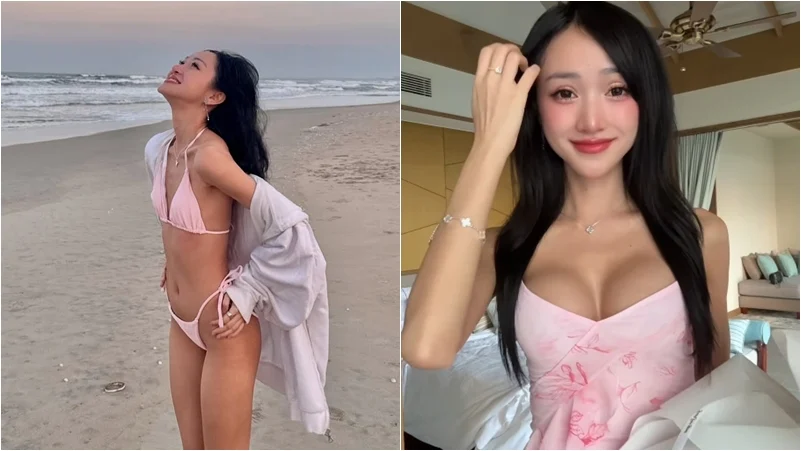
Clara Dao, a 26‑year‑old body positivity influencer whose identity was rooted in celebrating her naturally flat chest, has faced a media firestorm after undergoing breast augmentation in March 2025. For six years she garnered nearly eight million followers by candidly sharing her experience as a 32AA and promoting acceptance and self‑love online. Her decision to transition to a 32C bra size with a $3,398.56 surgery in Danang, Vietnam, sparked accusations of hypocrisy and caused her to lose approximately half a million followers across her platforms.
Dao has expressed no regrets, describing her choice as a personal journey and a form of creative liberation. She spoke openly about feeling pigeonholed by her own brand, admitting she felt confined by the “flat‑chested girl” identity and bored with repeating the same message. In her estimation, the surgery was less about conforming and more about exploring new expressions of self, a decision she undertook impulsively yet thoughtfully.
The influencer’s openness about her motivations extended to the physical impact of the procedure, which included complications like a delayed wound closure on her left side that prolonged her recovery. She acknowledged the discomfort during her first three days post‑operation and the limited mobility that followed. Yet she also conveyed a growing sense of normalcy and confidence as her body adapted to the new implants .
Cultural context appears to have influenced her comfort with the change. Dao, who moved from Hanoi to Danang and earlier lived in Canada, cited a societal preference in parts of Asia for polished appearances and visible femininity. She recounted how her family had urged her to consider enhancement since she was 17, long before her rise to social media fame. This perspective stood in contrast to her online persona, which had celebrated imperfections like belly rolls, acne, and body texture, traits she once showed without hesitation.
The backlash has been complex and emotional. Dao noted that while online abuse targeting her flat chest had previously come disproportionately from men, criticism since her surgery has predominantly come from women. She described being labeled a “fake” or “hypocrite,” accusations that she has accepted as part of the fallout from her decision. She understands that not all fans will empathize with her evolution, and she has taken this public reaction as part of a larger lesson in authenticity.
At the heart of Dao’s narrative is a deeper message about freedom and self‑definition. She frames her choice as a reaffirmation of self‑love, not as a denial of her past. She emphasized that her sense of worth, cultivated over years of body positivity advocacy, is unchanged and intact. She underscored that doing what brings one joy even if it challenges previous beliefs is itself an expression of self‑care .
Looking ahead, Dao plans a fresh start in Los Angeles, a decision she says was inspired by a desire to reshape her content and reach beyond the flat‑chested identity she had become known for. She envisions new creative directions and message arcs centered on personal happiness rather than external expectations. Although the move represents a pivot, she intends to remain true to the foundations of honesty and emotional resonance that built her platform.
The reaction to Dao’s transformation reflects ongoing tensions in influencer culture, especially around authenticity and brand image. Some fans argue that Dao’s prior content provided them with confidence and validation. Others contend that her personal evolution does not undermine her impact. The discourse around her pivot illustrates how social media follows rigid audience expectations and how creators face pressures both to maintain consistency and to evolve .
Dao herself has reflected on these dynamics, admitting that her platform may have unintentionally pushed the idea that self‑acceptance requires physical stasis. By choosing change, she challenges that notion and urges her audience to reconsider what it means to be true to oneself. Her story underscores the fragility and adaptability of public personas, and how individual growth can test collective assumptions .
Her experience also raises broader questions about body positivity movements and their relation to choice. Clara’s narrative aligns with a growing recognition that self‑love encompasses nuance, it allows room for change without self‑judgment. Rather than rejecting one form of expression, she has chosen another, expanding the definition of empowerment.
For influencers and public figures, her decision is a reminder that personal evolution may come at the cost of public approval. Yet it also highlights resilience, courage, and an enduring belief in self‑determination. Whether her audience embraces her new path or feels alienated, Dao remains committed to the promise she made in her first YouTube video: do what you love, unapologetically.
In the final analysis, Clara Dao’s journey is as much a cultural mirror as it is a personal milestone. It provokes renewed examination of the values of authenticity, the pressures of public identity, and the freedom to remake oneself on one’s own terms. As she reinvents her brand in Los Angeles, her evolving narrative may yet reshape the conversations she once led.


Comments