Heidi Klum’s s.Oliver Campaign Brings Her ’90s Self Into Today’s Wardrobe

The new Heidi Klum s.Oliver campaign turns a familiar fashion question into a staged encounter: what would today’s version of a person make of the clothes they wore decades ago? Launched on September 10, Casual Since Forever places Klum beside a digitally recreated younger self from the 1990s. A limited vintage-inspired collection accompanies the campaign, connecting the celebrity concept to clothes rather than leaving it as an isolated visual trick.
The younger Klum is not newly discovered footage of a real meeting. Production reporting identifies an AI-assisted face-swap process used to create the encounter, with the two versions styled for different periods. That distinction matters when the images travel outside the original advertisement. This is a constructed fashion campaign, not evidence that a photograph or film of Klum’s younger years has simply been placed beside a present-day interview.
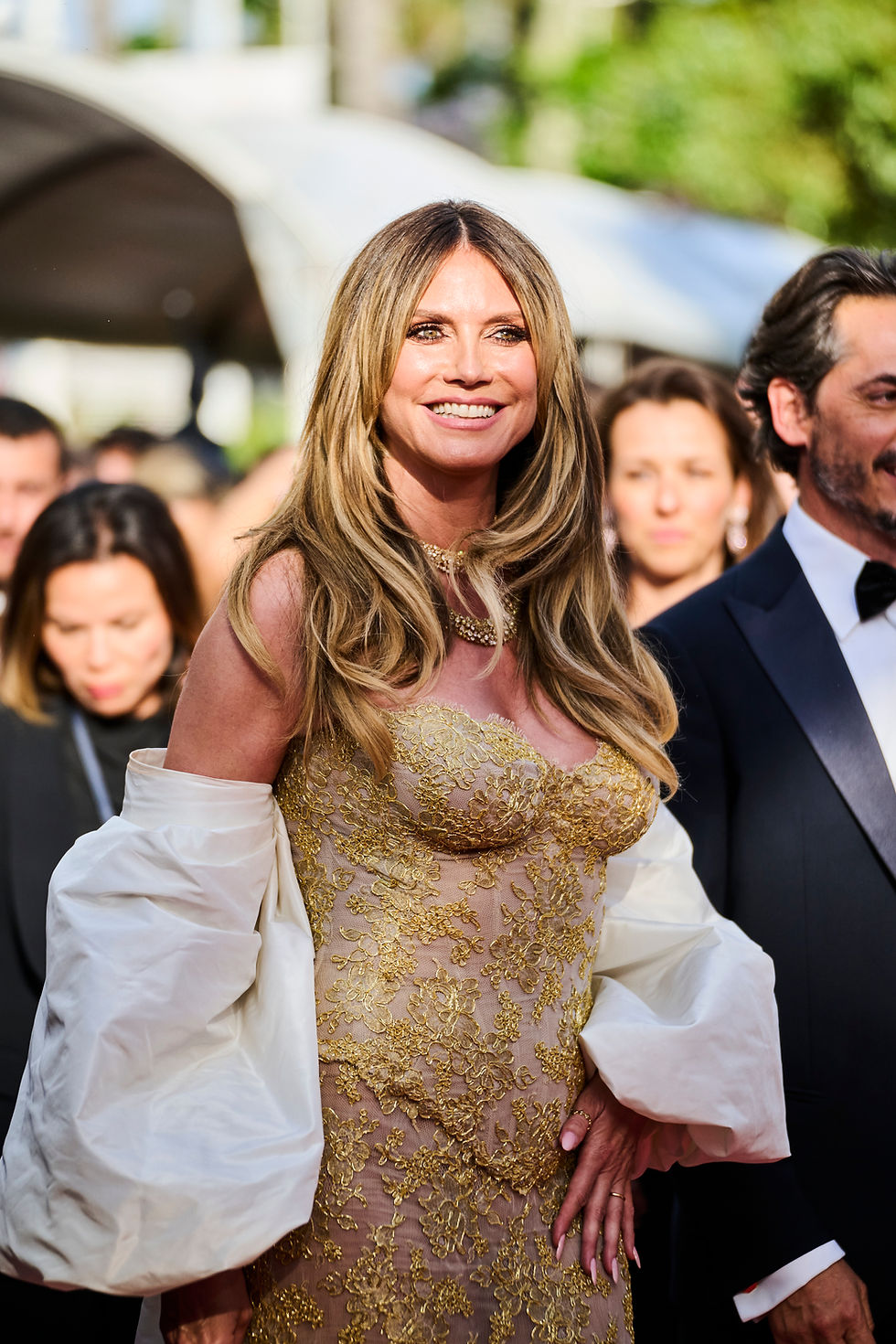
Heidi Klum at the Cannes Film Festival in May 2026; not a campaign image. Photo: Gabriel Hutchinson / WikiPortraits / CC BY-SA 4.0. Display size adjusted.
The brand’s stated idea is continuity in casual dressing. Its announcement presents the campaign as a conversation between past and present, with basics and vintage references linking the two. The accompanying capsule went on sale online and in selected s.Oliver stores at launch. Availability at selected locations should not be read as a promise that every item can be found in every market or branch.
Klum has been s.Oliver’s brand face since April 2026, so the September launch builds on an existing relationship rather than introducing her as a surprise new ambassador. In the company’s account, her connection to the brand also reaches back to her younger years. That personal association is part of the campaign’s storytelling; it is not an independent claim that every look on screen reproduces something she actually wore at a particular moment.
The clothes give the premise a more approachable focus than red-carpet dressing. s.Oliver’s campaign presentation highlights casual pieces, including denim and blouses, while the vintage capsule revisits 1990s references. The relevant contrast is between two ways of wearing a familiar wardrobe, not between an ordinary past and an impossibly glamorous present. That makes the styling conversation recognizable even for viewers with no interest in recreating a celebrity outfit exactly.
HORIZONT’s production account points to a particularly direct period cue: the younger version carries a Discman. It is a small prop with an immediate job, establishing the era without a lengthy explanation. The clothing and object work together to communicate time. Neither should be mistaken for documentary proof of Klum’s original wardrobe; their function is to make a fictional encounter legible at a glance.
Jung von Matt developed the campaign, with its Beauty Collective involved in the creative work. The production credits also identify director Alex Feil and photographer Rankin. According to the published production notes, still imagery was animated with AI assistance. That combination of photography, performance and digital treatment explains why the finished material needs to be understood as advertising craft rather than an unaltered record of two people together.
The campaign is designed to appear across several settings, including digital video, outdoor placements, print, social channels and stores. Each setting offers a different amount of context. Someone seeing a full campaign film may understand the premise immediately, while a cropped social image can lose the explanation of how the younger likeness was created. Keeping the distinction visible is especially useful when discussing a celebrity whose real photographs already circulate widely.
For style followers, the more interesting question is what survives the time shift. A denim piece or a casual blouse can feel different because of its cut, fit and companions, even when the broad category stays familiar. That is a reading of the campaign’s juxtaposition, not a claim that the collection has established a new trend. It invites comparison without requiring shoppers to treat an entire decade as a costume.
The limited-collection label also deserves a practical reading. It describes the capsule’s positioning, not proof of demand, a sellout or future resale value. The launch announcement does not establish how individual pieces will fit every customer or whether a particular item will remain in stock. Readers interested in the clothes can distinguish the campaign’s mood from the product details they would need before choosing anything for their own wardrobe.
There is no need to turn the digitally younger image into speculation about Klum’s appearance or private life. The verified development is a commercial fashion project built around her public role with the brand. Its relevance is the way a recognizable model, a period wardrobe and a deliberately artificial encounter are being combined to tell a story about casual style across generations.
The campaign’s clearest appeal is therefore not that it can bring the past back exactly. It cannot, and it does not document an actual reunion. Instead, it uses Klum’s image to put two fashion moments into conversation, then offers a capsule collection alongside that idea. The useful distinction for viewers is simple: the clothes are a current release, while the meeting with her younger self is a creative construction.
Related coverage: Vivian Wilson Makes Fashion's Case for Human Imperfection in Desigual Campaign and Wisdom Kaye’s Fashion Influence Takes Center Stage at Harlem’s Fashion Row.


Comments